If brand identity is important then so is brand consistency. The human eye is extremely good at identifying colour – or least when comparing colours. Seen in isolation the dark blue tote bag will appear to be the brand colour until compared to the logo directly. Then even the smallest differences shout at you.
This colour inconsistency undermines investment: companies spend significant budget on brand guidelines and identity work, then inadvertently compromise it on the merchandise that goes furthest into the world.
This matters when more than a single piece of branded merchandise is used - say at an exhibition. So why would your brand colour be wrong on branded merchandise?
- Standard colour products.
Most promotional product suppliers choose colours from a fixed manufacturing palette — typically a handful of options per product. So when buying a tote bag for example they will present a product and a range of colours:
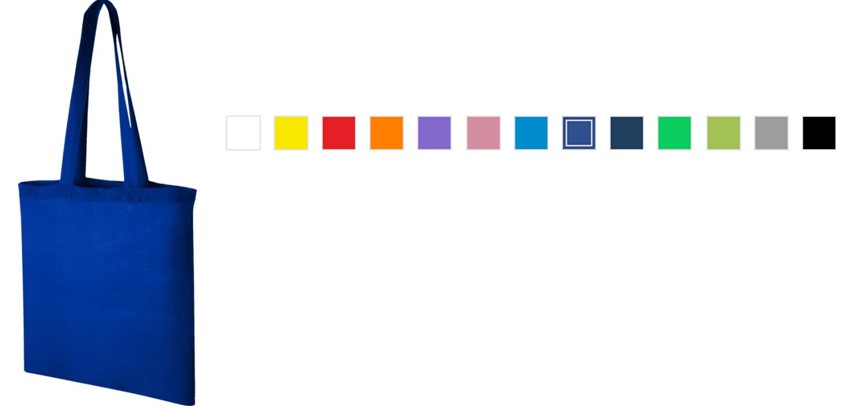
However, unless you ask, the supplier will not necessarily volunteer the Pantone reference of the colour. The one shown is described as Royal Blue – which does not sufficiently define its colour, which is actually Pantone 286C
The same supplier can provide a notebook in Royal Blue
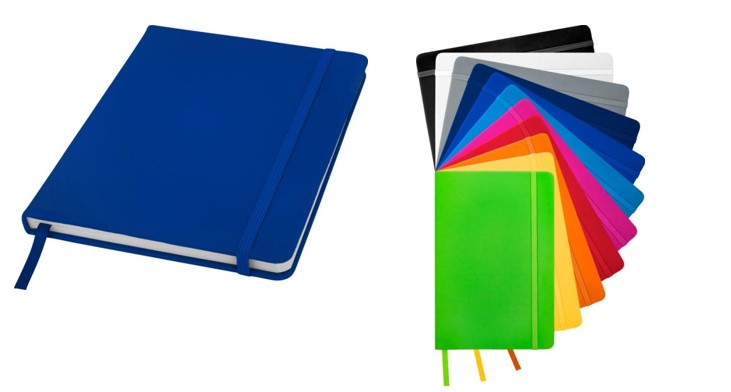
The Royal Blue notebook however is Pantone 2145C – close but just different enough to be jarring.
Solution: always ask for the Pantone reference of the product.
The alternative solution is to have the product made to be Pantone matched. This is a little more expensive and will require an MOQ of at least 100. See: https://www.pdi.co.uk/custom-promotional-products
2. Screen based visuals
Comparing colours on screen can be dangerous – as in the example above – it is difficult compare a screen colour. This is because a screen displays in an RGB mode which is different from the CMYK and Pantone systems used in printing. For a full explanation of this see https://www.pdi.co.uk/insights/what-is-rgb-and-cmyk-how-colour-works and the accompanying video https://youtu.be/looNV3supRQ
Solution: Never believe what you see on screen, use colour references
3. Printing techniques
Setting aside the issues of screen and print, even within printing different techniques can present variation.
When printing by screen or pad printing (tampo) the colour is created by mixing the ink to the appropriate colour reference. When printing by a digital method to the promotional product the system used is CMYK.
Although CMYK can produce colour close to Pantone the system used is different betx explaind by this diagram:
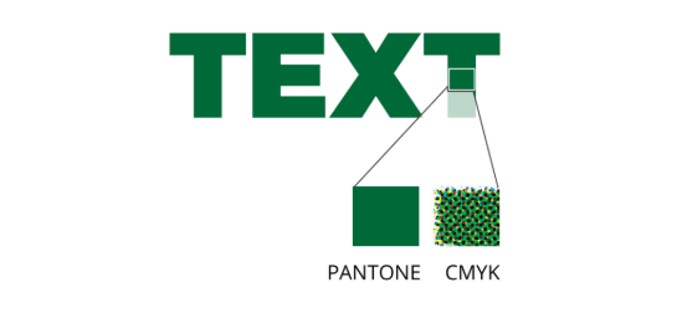
One creates the colour from the ink the other system creates an optical allusion that the eye blends the colour. They will be very close, but they are different.
The solution is to provide the digital printer with a Pantone reference to hit and allow him to make the necessary adjustments on the machine.
4. The colour of the surface you print on – not all whites are created equal
When screen printing and premixing the ink to a Pantone reference it is possible to still get colour variation – imagine printing to a smooth white surface versus a textured surface which is cream. Same ink, different appearance. Print to a white notebook and a natural-coloured tote bag and you will see the difference.
Solution is to think about the background colour as well as the printing
5. Colour definitions
We have ,mentioned Pantone as a reference system – see https://www.pdi.co.uk/insights/what-is-rgb-and-cmyk-how-colour-works
But Pantone is not the only system. We have found that more and more clients are referencing a Hexachrome number. The Hex system is becoming more common in the digital world to define colour. However, in promotional merchandise and printing Pantones still rule. There may not always be a Pantone number to match the Hex number.
We were recently working with a client who was very particular about their brand colour Hex #6BBA9F – however there is not Pantone and nearest match is slightly different
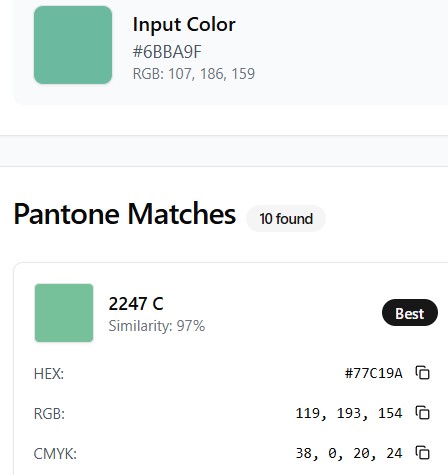
Reference https://pantonecolors.net/hex-to-pantone/#google_vignette
Solution is to always use Pantone references. It's the only reference that works across different factories, materials and countries.
If you wish to discuss colour and Pantone matching then please contact us at enquiries@pdi.co.uk
You can see the video HERE
AUTHOR: David Platt, BSC, BA, MBA. Dip. M
David has been involved in print and promotional products for 30 years, as Executive Director of PDI – he has the scars of printing colour to match client requirements over many years, as well as a formal education in Business Management and Marketing.